


Reflections on the Iona Pilgrimage
Jeremy and Julia Fletcher were part of the group gathered by Mark Haworth which visited Iona from September 26 – October 3 2026. Cathedral folk were joined by clergy and worshippers from Suffolk, Cambridge and Wolverhampton. They stayed at The Bishop’s House, the Catholic House of Prayer and the Argyll Hotel. Many travelled by train, some by car, most by coach and all by ferry at some point. The Iona Community is an ecumenical organisation which staffs the Abbey and has centres on Mull and in Glasgow. Its “Wild Goose” worship resources and its communal life have had a profound influence on the worldwide church.
“There’s not a lot of up and down”.
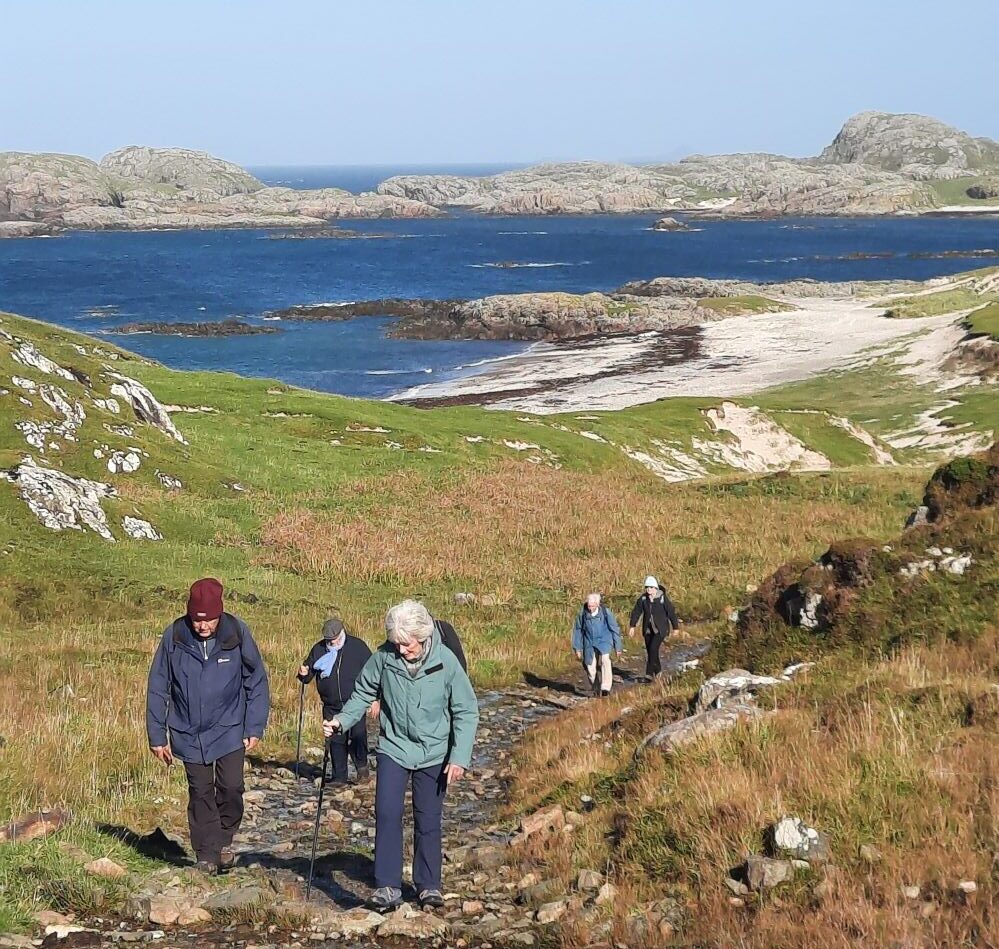
Was it the topography of the pilgrims’ East Anglian homeland which influenced our leader’s promise that the day’s walking expedition would have next to no undulation? As climbs rose before us, and hands had to be used as well as feet, we could perhaps reflect that everything is relative, and the highest hill on Iona was only 300 feet rather than the 3,000 feet of Mull’s Ben More in the distance. But there was still much upping and downing.
It wasn’t just the walks. Thirty-two pilgrims, gathered as disparate sheep by our shepherd in chief, Cathedral Chaplain Mark Haworth, endured multiple transport issues both there and back (including an overnight coach journey from Glasgow to London for which the fifteen victims deserve more than a medal). Those who made it on small boats to Staffa encountered serious waves at the closest of quarters, sometimes from within. It was Scotland, so the weather was often up and down and up again in the space of a few minutes.
And it was a pilgrimage: a journey made in hope with many uncertainties, and spiritual as well as practical ups and downs. Iona is archetypically remote. What was it about the Celtic saints that led them to places on the edge and far away? Whatever it was, the far away soon became the centre, and the medieval heyday of Iona is now recalled in its modern revival, as the world gathered each evening for prayer in the Abbey in many accents and languages, and from many denominations. All of us found something which challenged as well as comforted, which disturbed as well as inspired.
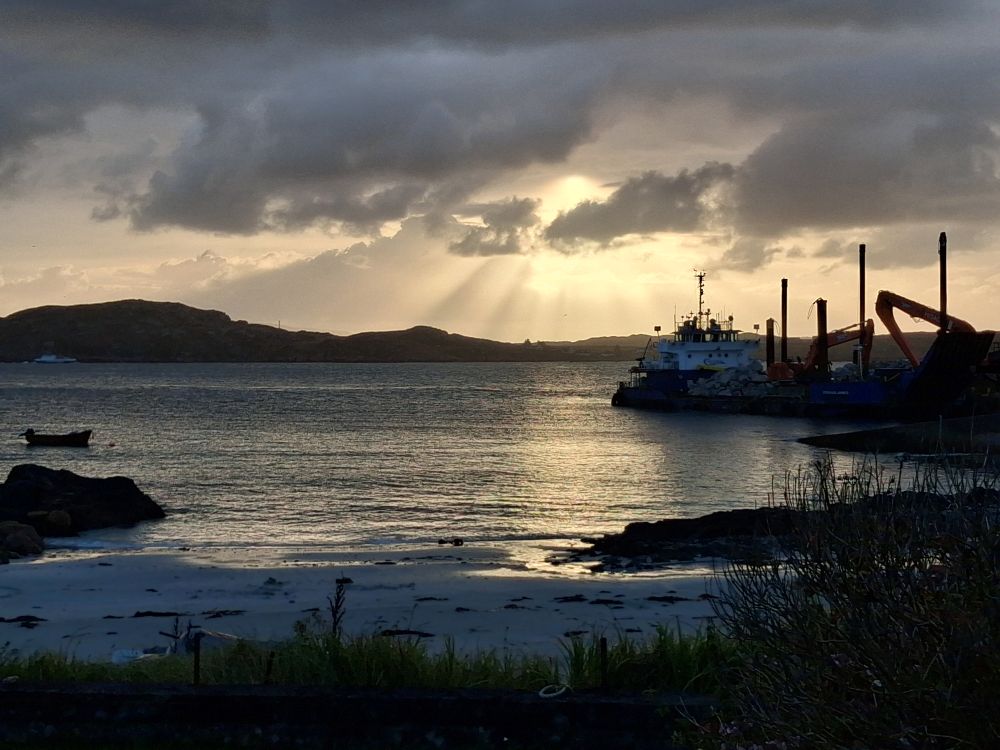
What developed was our identity as a group and within the group. Strangers on a train on the first Friday had become the most supportive and generous body eight days later by the time the ferry docked late and we missed our train and the one after that. The tentative getting to know each other on day one changed into the holiest of conversations as the “thin place” between heaven and earth was reflected in the new closeness of those who had previously been unknown to one another.
Many of us will remember exactly where we were when something life deepening and changing took place, but we have brought back physical reminders too: not the pilgrim’s scallop shell, but a limpet gathered from the beach next to the Bishop’s House where many stayed, and perhaps a stone from the bay where St Columba is said to have landed in 563 AD. That stone stands for what will be, as we had thrown another one into the sea to stand for all we wished to leave behind.
Mark Haworth deserves (and received) massive appreciation, especially for his almost biblical calm in many storms. Iona, which most of us only knew as an idea, has now become a landscape of our spirituality, and, to quote T S Eliot about Little Gidding, a place “where prayer has been valid”. Iona’s ups and downs, for one week in September, may have been geographical, organisational and meteorological, but above all they were spiritual and communal, and they led us on. The wind of the Spirit has now scattered us, but this new-formed band of pilgrims happily treads on, ups and downs and all.