


Bury St Edmunds owes its very existence to the legendary figure of Saint Edmund, an Anglo-Saxon king whose relics became the heart of the town’s identity and prosperity. Without Edmund’s remains, revered for their sacred power, the town and Abbey would not have developed in the way they did.
This Interpretation Plan will tell the fascinating story of the town, its people, and the Abbey, exploring the enduring myth of Edmund through six key themes.
Sacred Bones will dive deeper into the story of Edmund’s remains, showing how they were central to the growth of the Abbey and Bury St Edmunds. His bones became a symbol venerated by Anglo-Saxons, Vikings, and Normans alike, drawing pilgrims from all walks of life and making the Abbey one of the wealthiest and most powerful in medieval England.
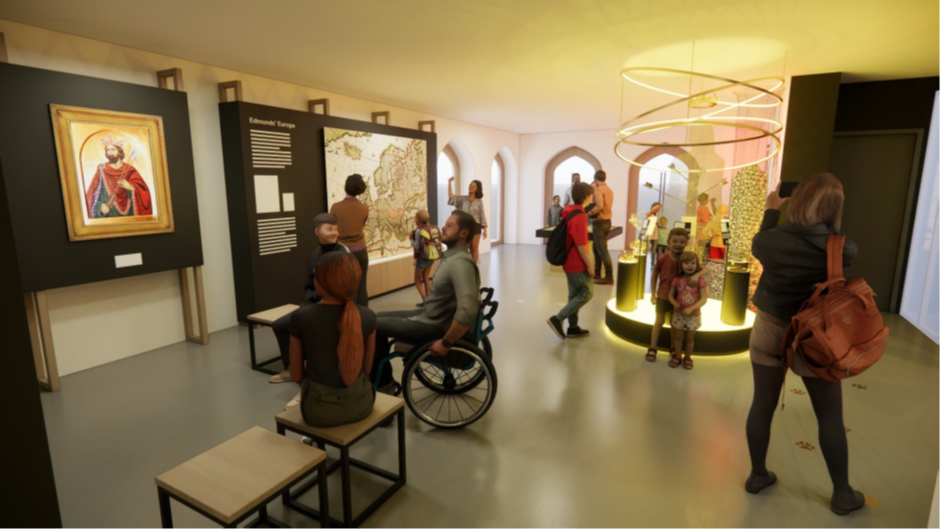

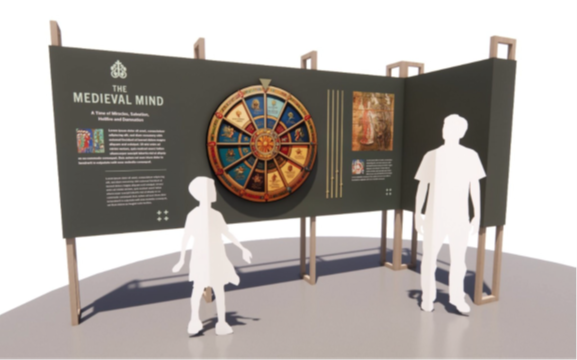
To understand why Edmund’s relics were so highly prized, the Medieval Mind theme will immerse visitors in the medieval worldview, where saints like Edmund were believed to perform miracles and offer protection in a world rife with fear of hell and eternal damnation. This section will also contrast these beliefs with the post-Reformation world, where such traditions were swept away.
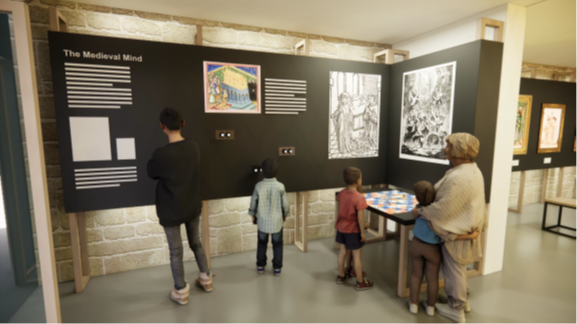
The exhibition will also explore Edmund’s Abbey, highlighting the monumental scale of the Abbey complex and its economy, supported by pilgrimage, land, and royal patronage. Tensions between the Abbey and the town, often erupting in violence, will be examined in this section, along with the social, economic, and sacred life of the Abbey.

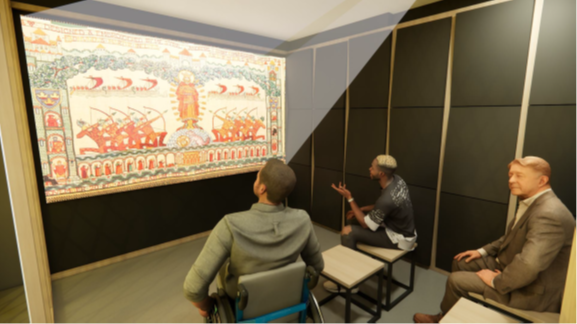
Edmund’s People will focus on how Edmund’s shrine made Bury St Edmunds a significant political and cultural centre. The Abbey was not only a place of devotion but also a hub that shaped national affairs, often influencing the formation of England and the legitimacy of royal power. The story will also touch on themes of belonging, intolerance, and the social dynamics of the time.
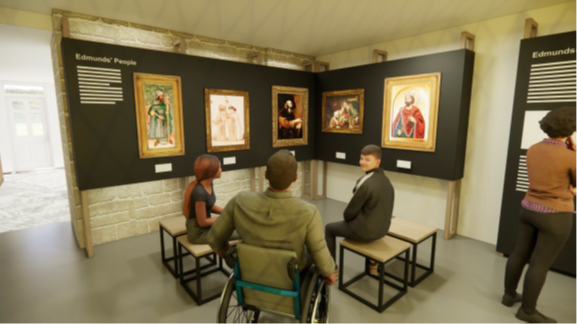
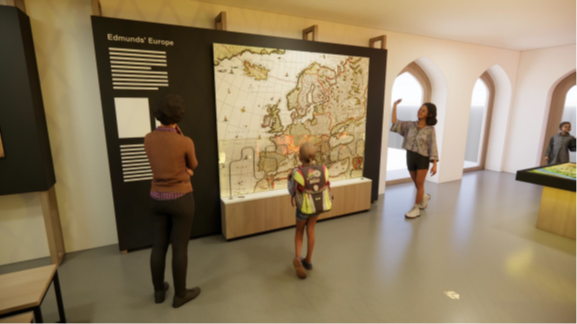
In After Edmund, the exhibition will examine the radical impact of the Dissolution of the Abbey in 1539, when its buildings were demolished and its lands redistributed. This event dramatically reshaped the social and cultural fabric of the town, leaving gaps that would not be filled for many years.
Finally, Edmund’s Land explores the environment that shaped the Abbey, including the two rare chalk streams, the Lark and the Linnet. These rivers were vital to the Abbey’s economy and daily life, providing water for drinking, food production, and power. Today, efforts are underway to improve the rivers’ ecosystems, supporting wildlife like water voles. The Abbey Gardens, shaped by the ruins, have long been a central feature of Bury St Edmunds, evolving into a public space enjoyed by all.
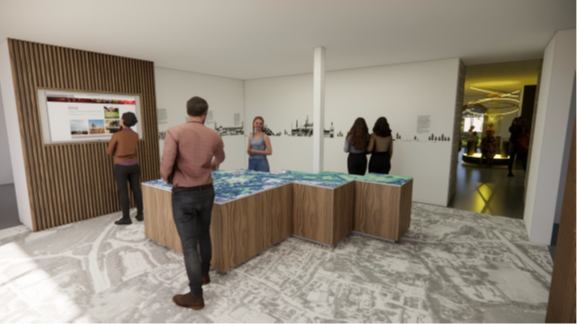
This exhibition will also feature interactive AR experiences, informative signage, family-friendly trails, maps, and temporary exhibits, allowing visitors to engage with the rich history of this remarkable site.


